Monday, January 30, 2012

Viggle for Couch Potatoes - Initial Pros and Cons

Hooray! Here comes the first ever television loyalty program on social for all you couch potatoes out there.

What is it?
It is a social app that allows you to check-in to your favorite television shows to receive points for gift cards to CVS, Burger King, Starbucks, Banana Republic and many more.

What can you do on it?
-Check-in to shows (obviously).
-Watch short trailers or ads for points.
-Keep up-to-date and post on Facebook and Twitter about the show in real time.
-"Like" shows.
-Set reminders/alarms for when your shows are aired.
-Keep track of your check-in and rewards history.
-Invite your friends to Viggle for 200 points.
-Look up more info on shows listed via IMDB, Wiki, iTunes, Amazon, Bing, and Facebook.

How does it work?
It works like Shazam, it "listens" to part of the show to identify which show you're watching.

Here are my initial thoughts of the app:

Pros
1. Users are awarded for something they already love to do. 
This is like if I got paid for sleeping my normal hours. TV-lovers are now rewarded with food, clothing, music and more just by doing their things, and perhaps encouraged to be a little more social.

2. Yes, do remind me when my shows are AND give me free stuff. 
So Viggle will be my alarm clock for shows and give me things too... can't complain.

3. Yay! I'm not the only Castle fan out there admiring how pretty Becket is! 
The "Latest Chatter" feature pulls up a real-time feed from Facebook and Twitter on the chatter about your show. It allows you to post real-time to share/complain/admire with fellow TV-ers during your show.

Cons
1. Wait, how many hours do I have to watch for a coffee? 
So let's say a $5 gift card for Starbucks is 7,500 points (as currently listed on Viggle), and one check-in is around 100 points... if my Asian math does not fail me, that equates to 75 check-ins. That's about 19 shows per week for a month, less than 3 shows a day... I don'w know about you, but that's a lot of TV watching.

2. Oh dear god my muffin top is not going away. 
Not judging all the TV-watchers, but I eat when I watch TV... this increased in TV viewing doesn't seem very healthy for me. Just think what happened when Facebook was born and how many hours people spend Facebooking.

3. EVERYONE SHUSH, I'm trying to check-in. 
For those of you who use Shazam, you'd understand my frustration. Since it requires "listening," if the parts of the show aren't properly recorded (of which I assume you could be with friends, cooking, or drying your hair,) you can't check-in! "Sorry, no match" is one of the most irritating messages.

4. Why don't I have Viggle friends =[.
Yes it allows me to read/post on Facebook and Twitter, but what if I just want to see what my friends watched/ are watching? Or if I wanted to recommend shows to my friends? Foursquare lets me have friends, can I have friends on Viggle please?

EDIT:
5. I can't invite my friends.
So one of my friends asked me to invite him so I can get the 200+ points. It turns out I can only invite by email, and ONLY emails that are existing in my iPhone address book. Inserting a new email address is not possible.

What can brands do with this?
  • Well ad exposure of course. When you check-in, a full-iPhone-page spread of advertising pops-up.
  • Learn more about what their audience like to watch, then join TV campaigns with social ones!
  • Encourage conversation DURING shows!
  • Contests! Woot! Imagine Coca Cola running a contest for users to find product placement within an episode for prizes!
So there goes my initial thoughts of Viggle. In general, I think it's a pretty cool idea. The app has only been launched for less than 2 weeks. I will come back to this when it is in full throttle!

What are some of your thoughts on this? Do comment or tweet at me @Mayzyap :).

Thursday, October 13, 2011

How Bad is Shisha for you? [Most Recent Figures]


I usually don't put personal posts here. But here's an interesting one (also, it's super interesting how I found it on Facebook Guardian read!)


Here's the gist of the article findings: 
The volume of smoke inhaled in an hour-long shisha session is estimated to be the equivalent of smoking between 100 and 200 cigarettes.  
The estimated findings show that, on average, a smoker will inhale 1/2 a litre of smoke per cigarette, while a shisha smoker can take in anything from just under 1/6 of a litre to 1 litre of smoke per inhale.

- World Health Organization 


Studies led by independent researchers at the Royal University of Saudi Arabia have shown that shisha smoke is 30 times less concentrated in chemicals than cigarette smoke. 
While about 5,000 chemicals have been identified so far in cigarette smoke, chemists and pharmacologists from Saudi Arabia only found 142 chemicals in shish smoke.
- Dr Kamal Chaouachi, a tobacco expert who teaches at Paris IX University
Here's the full article:
http://www.guardian.co.uk/society/2011/aug/22/shisha-smoking-how-bad-is-it


Further reading [A Journal of Public Health Article 2009]:
http://www.springerlink.com/content/58352477706011t0/


Also, someone needs to make an info graphic version of this. :).


Thanks Kevin for the info on this!

Monday, September 26, 2011

How to Prepare Yourself to be a #Social #Strategist from #College

As Social Media is a rising platform for marketing, it is also an increasingly popular career path for many graduating students, but what does it take to become a social strategist and how can you prepare early?

Information from an interesting infographic by Valtier Creative:
http://mashable.com/2011/09/24/social-media-career/

Here are some things to look out for as you begin/ finish up your college career:

1. What major should I be?
- 46% of Social Strategists hold a Communication and 40% hold Marketing degrees.
- 58% of existing Social Strategists say that what makes them successful is that they are multi-disciplinary and can wear many hats. i.e. it could be a good idea for a Liberal Arts education.
Take your pick.

2. Be familiar with your numbers, and argue it with a story
- One of the most important aspect in becoming a good social strategist is the skill in measuring and reporting ROI (as well as producing them of course.) 

What to do in college:
So some great courses to take if they aren't already in your requirement list, are statistics, introduction to business management, etc. They will also help you get used to very basic but useful tools like excel.

Other courses such as Logic and Reasoning (philosophy), or creative writing will help you make better reports + proposals!

3. Work on your leadership and social skills
- To be a social strategist, you must be able to manage a team, work with agencies, external/internal stakeholders, as well as be able to teach others via workshops and training. 

What to do in college:
Get some experience via student groups, or start your own business while you're in college! (Or take classes like Organizational Behavior, or intro to public relations/corporate relations!)

40

Monday, September 19, 2011

Implications of The #Facebook #Subscribe Button - Pros and Cons

Since the launch of Google+ and it's success in recruiting users, Facebook has been adding new features frantically - the new photo viewing options, video chatting, new navigation bars, and most recently, the subscription button.

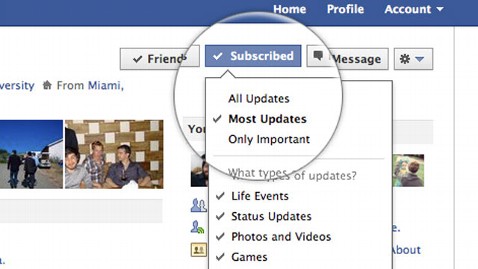
This new feature allows users to subscribe to updates, including photos, statuses and more, from people they aren't already Facebook Friends with. This may not seem like a big deal yet, but it opens a door to endless potentials for brands, celebrities and thought leaders for better broadcasting. Of course, on the flip side, with potential comes a great deal of risk.

Here are a few aspects I jotted down briefly:
 
Pros:
1. Facebook and Twitter just had a baby.
Facebooks, Google+, and Twitter are all unique in their own user interfaces and purposes. Twitter can be considered mass broadcasting through microblogging where anyone can tweet with or read other users' tweets, given that they're not private. Google+ is a more general interface that focuses more on user sectoring, and Facebook, the friend connector, allowing friends to catch up, learn more about, and maintain relations with one another without physically hanging out. 

However, this subscription button changes all that. Allowing users to follow others' updates without friending incorporates Twitter's broadcasting aspect, creating a TON of opportunities for celebrities, brands and others to broadcast their messages to a larger audience.

2. Better classifications of your friends and invisible stalking.
No more limited profiles, or friend requests. That's right. You no longer have to be friends with someone to stalk them if they enabled the subscription button. Also, you don't necessarily have to friend people you just met in order to see what they're up to until you hang out with them more.

With subscription, you can now classify your friends/ non-friends into lists so your updates are all categorized. You don't have to see updates of farmville or restaurant city any more. Just like twitter, you can categorize your news outlets, fashion tips, non-profit events, anything you wish so they are better organized. There are options to hide photo updates, video updates, and more from lists to make your feed more personalized.
Cons:

1. It just murdered the two-way connect flow
Facebook is unique in that it encourages a two-way communication. It's about friends and connection. The subscription button just threw all that out the window. It's true that Twitter itself focuses on engagement even though it's a free-for-all type of conversation, but the word "Facebook Friends" just got degraded.

2. New metrics needed
With public subscriptions, the measuring system just got complicated. Facebook Insights will have to come up with better metrics to measure subscriber activities.

3. Back to the Privacy Issue
I am sure most of everyone is social media savvy by now, but there are of course people who are still a little lost trying to catch up with all the tools bombarded their way. For people who want to use Facebook personally, the subscribe button may cause issues, as it allows non-friends to read your updates.


Changing its mission statement.
Just from first impressions, it seems to me that the subscription button is definitely a good move in terms of helping brands and celebrities work their marketing strategies. However, if Facebook were to follow its original 2008 mission of " “Facebook helps you connect and share with the people in your life.” Then the subscription button is way out of its boundaries. Its new mission statement however, became “Facebook’s mission is to give people the power to share and make the world more open and connected.” This for me makes Facebook a lot more business and revenue oriented, and a little negligent of user interests.

What are your opinions on the new Facebook Subscribe button?

What you might also be interested in:

Facebook Subscribe Button: What It Means for Each Type of User

What Facebook's new Subscribe button means to brands and businesses 


The Complete Guide To Facebook’s Subscribe Button

Sunday, July 31, 2011

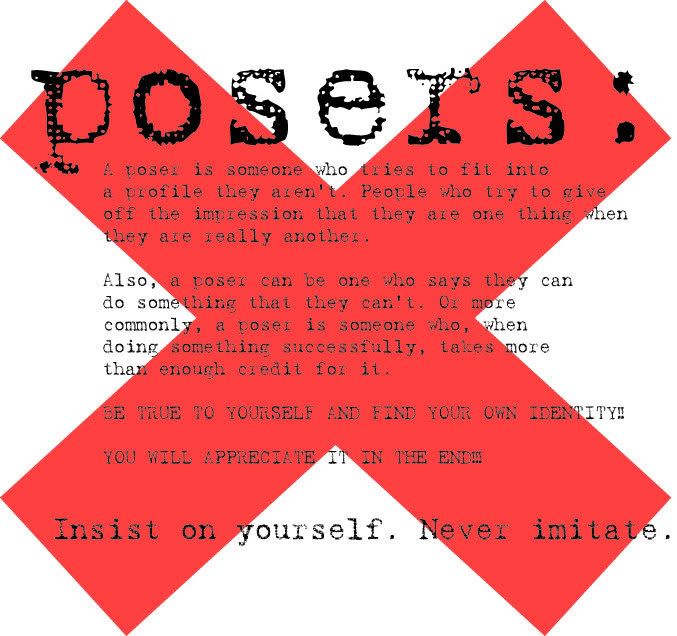
What Do Real Social Media Experts Think of the Posers

As @NeilGlassman (blogger for SocialTimes and Principal Marketing Strategist at WhizBangPowWow) states:

“Active Twitter users cannot avoid contact with those who purport to be able to make you a "Social Media Rock Star" by dramatically increasing your Twitter follower count.”

Since the prominent rise in social media marketing, there has been a sharp increase in the number of social media experts and gurus everywhere in the past 6 months. Many of them are indeed legitimate community managers, strategists, and public relations specialist, but a large number of them are self-proclaimed “specialists” who don’t seem to know what they’re doing.

Some of them are easy to differentiate as they spam sales-y tweets every minute, send auto DMs, and do not interact at all with their followers; but others, with high follower counts, who understand interaction but not necessarily marketing/PR strategies are a little more difficult to point out.

As a soon-to-be graduating Public Relations student focusing on social media marketing, I see this as a rising issue, making it difficult to differentiate myself from other “social media gurus” in the hiring process for corporations that know little about social media.

What do experts think?
After having short interviews via Twitter (J yes twitter), and emails with various experts such as:


Frederic Townes
CTO of Mashable


Amber Avines
Former Broadcast Journalist @CBS and Los Angeles Times
 

Neil Glassman
Blogger for SocialTimes and Principal Marketing Strategist at WhizBangPowWow
 

Jason Sem
Corporate Social Strategist at J.B. Sem Consulting, LLC.
 

James Dabbagian
Freelance blogger and copywriter.


There seem to be a host of other issues with this dramatic rise in the number of social media experts.

1. There are WAY too many of them
The barrier to entry for social media is very low – it’s usually free, and the only thing you dedicate is time and brain juice. This allows a lot of stay-at-home employees, unemployed individuals or social fanatics to jump on the wagon.

It’s a free-for-all chance for success with little monetary investement.

“There are too many self-proclaimed social media gurus out there who know NOTHING & teach people incorrectly.” @Wordsdonewrite.

2. They are giving out the wrong idea about social media marketing!
For a beginner in Twitter, it’s easy to be distracted by the immense number of followers that some of these social gurus have. It is easy for them to fall into the trap of following the gurus’ footsteps in aiming for quantity over quality or spamming auto-DMs and retweets.

The most common misconception is that followers are EVERYTHING. Although a large size of followers are immensely important as it increases exposure and the size of your reach, it’s not the only thing that matters.

Here’s an article about good social media strategies:

3. “Lots of companies contract out social media help, but don't know how to screen to get the most knowledgeable people.” @Wordsdonewrite

“The thing is that social media has been such a disruptive technology (but necessary) that most companies are way behind the curve and are looking for help. Any help.  Unfortunately, some turn to these gurus and find out pretty quickly that they're all talk and no action. This is where the social snake oil salesmen come out and pray on the confused marketing execs.” @Jbsem

Then how do we sift through the gazillion social gurus?
“I think you need to unbundle those who respond to questionable (perhaps, false) gurus and those that have a strategy that may overemphasize building numbers.” @Neilglassman

“Real strategists will cultivate KPIs relevant to the campaign/project at
hand if possible, more importantly, they will be specific about the aims they have for a campaign or project. For example, if trying to increase awareness for a social good project, did donations increase by some specific percentage as a result of engagement on twitter?” @W3edge

It’s about success stories, like in any other type of marketing. What kind of experiences and results do these people have in their pockets that they can showcase?

Here’s an article about how to select a social media agency to manage your brand:

How does Klout scores come into play here?
The general consensus is that social media metrics definitely show influence, but should a host of other variables should be considered.

“Klout scores are 1 of MANY tools that can be used. Frequently, scores don't accurately represent engagement. Look @ big online pic.” @Wordsdonewrite

Here’s an article regarding how to effectively measure social media results:

A different perspective:

How are these spamming social media gurus different from the classic infomercial tactics or do-it-yourself/ get-rich-schemes others have succeeded in promoting?

“If we are speaking about the same "experts," it actually appears they might be doing well. Those presenting social media, and Twitter in particular, as a do-it-yourself, get-rich-scheme are not much different than others who have done the same over the years for other industries.” @neilglassman

The reason why the late-night infomercials or online get-rich scheme ads still exist is because they still work, meaning there are obviously people who buy that type of content/promotions. If this is the case, the same would indeed apply to social media.

Takeaway:
Of course, I’m not trying to say that everyone who focuses on quantity over quality is a snake oil salesperson, but I simply wish to warn employers who are trying to catch up with the social media wave the caution they should take while hiring social media experts to manage and represent their brand.

It may sound cliché, but social media marketing truly involves attention to detail, engagement, carefully planned strategies, campaigns and a host of other traits.

This is just the beginning of outlining some issues the rise of “social media gurus” will arise.

For now, keep in mind that a little skepticism goes a long way.

Acknowledgment:
Thank you @DaveKerpen and @Caraizzle for edits!